EV charging parking enforcement solutions
Ensure reserved EV charging spaces are used only during active charging sessions and within the permitted time limit.


Today, 1 in 4 vehicles parked in EV charging spaces is not charging, and 50% of violations exceed 20 minutes.
Urbiotica’s solutions enable different levels of automation to manage EV charging spaces more efficiently, improving availability, compliance, and service profitability.
-
Ensure proper use of EV charging spaces according to regulations
-
Prevent misuse by vehicles that are not charging
-
Provide users with real-time information about charging space availability
-
Reduce overstays and improper occupation that may extend beyond 20 minutes
-
Improve turnover and availability of charging points
-
Increase profitability of charging services
-
Reduce enforcement operational costs
-
Optimize enforcement resources through automated alerts
-
Improve the EV driver experience
-
Support regulatory compliance with verifiable evidence
How does EV charging parking enforcement work?
The solution enables management of EV charging spaces through different levels of automation, improving availability, increasing turnover, and preventing misuse or unauthorized parking.
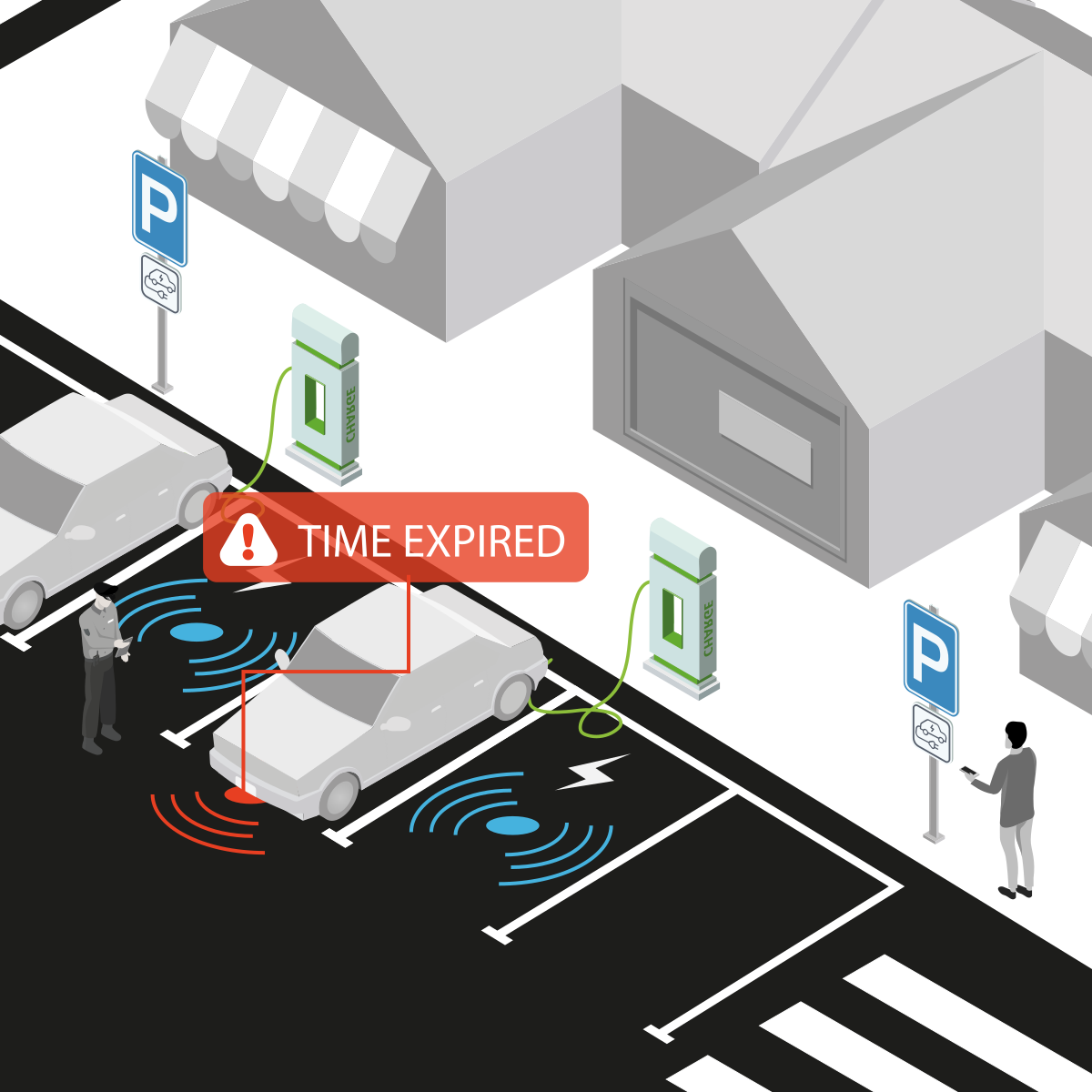
Automated EV charging enforcement with real-time alerts
Space occupancy is detected using IoT sensors or cameras
The Charge Point Management System (CPMS) is integrated into the platform, providing real-time session status, including whether the vehicle is connected, actively charging, and when charging has ended
The platform matches occupancy data with CPMS information and configured service rules, such as maximum allowed time or charging policies
If misuse is detected — such as a vehicle not connected, a completed charging session, or an overstay — the system generates an alert and acts according to the incident type: it can automatically apply overstay fees or notify the relevant authority or operator to take action according to regulations
Result: an efficient model that combines occupancy and charging status data to maximize charging point availability, reduce misuse, and improve both operational efficiency and service profitability.

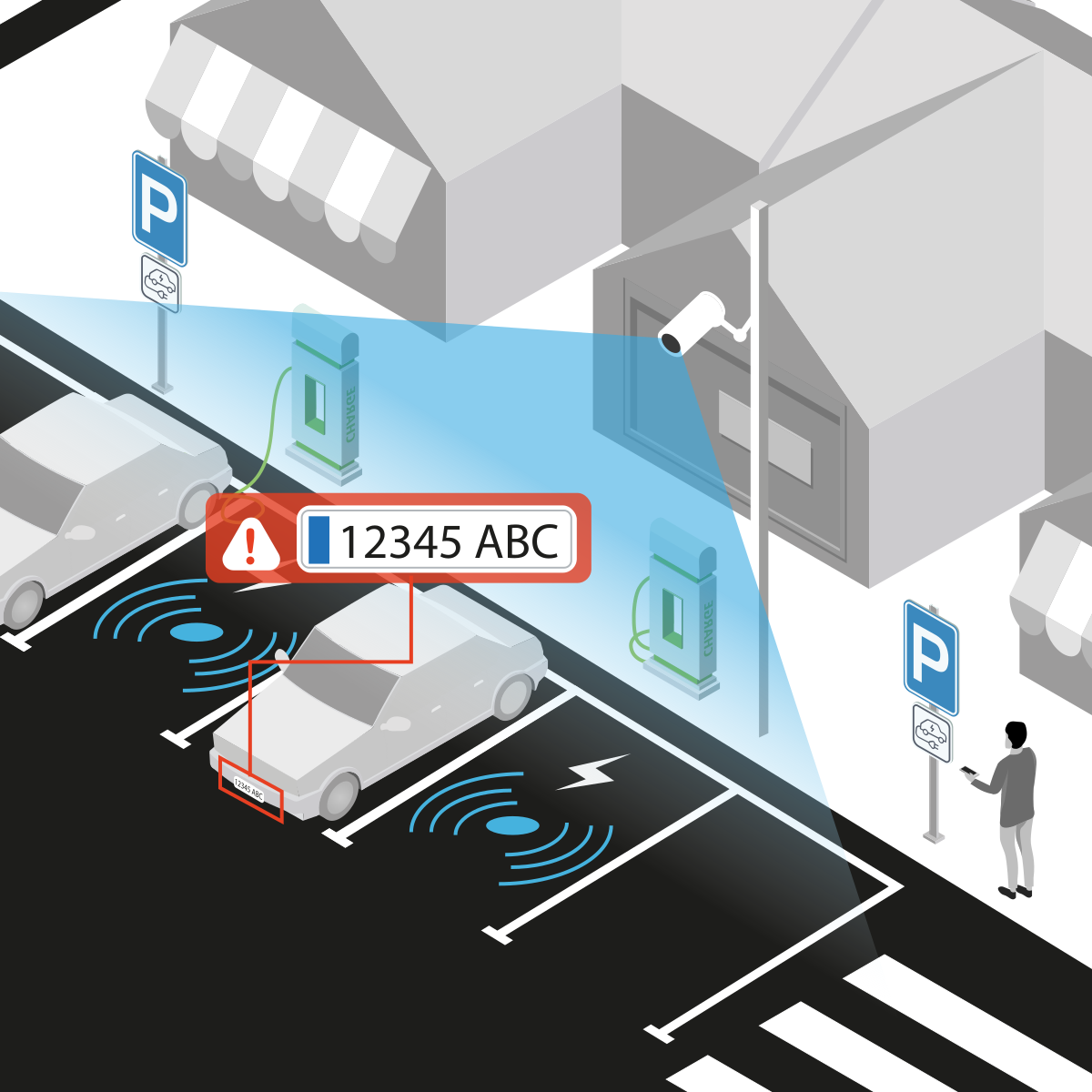
Fully automated EV charging enforcement with LPR cameras
Cameras automatically detect space occupancy and capture the vehicle’s license plate
The CPMS is integrated into the platform, providing real-time session data, including connection status, charging start, charging end, and duration
Urbiotica’s platform automatically matches occupancy and charging status data while monitoring usage time according to regulations or service policies
If misuse is detected — such as a vehicle not charging, a completed charging session, or an overstay — the system automatically generates evidence using cameras and license plate recognition (LPR)
In case of overstays, the system can automatically apply additional fees according to the defined pricing policy
When a violation occurs, the platform can automate incident management and, depending on the operational model and applicable regulations, enable enforcement processes without manual intervention
Result: a fully automated model that combines occupancy control, charging status, and usage time monitoring to maximize turnover, ensure compliance, and improve the profitability of EV charging infrastructure.

Discover available technologies and configure your EV charging enforcement solution.
Technologies

Why choose Urbiotica for EV charging enforcement?
CPMS integration
Real-time validation of vehicle charging status.
Space-by-space monitoring
Precise supervision of each charging point.
Real-time data for smarter decisions
Insights into usage, turnover, and compliance.
Robust and scalable technology
Proven in demanding operational environments.
Flexible automation levels
Adapt the solution to your operational and regulatory needs.
Projects that have trusted ParkCtrl




Frequently Asked Questions
How does the solution improve operational efficiency and profitability?
Today, 1 in 4 vehicles parked in EV charging spaces is not charging, and many improper occupations exceed 20 minutes. This reduces charging point availability, limits vehicle turnover, and negatively impacts the user experience.
By ensuring proper use of charging spaces and preventing overstays or misuse, the solution improves turnover and increases charging point availability, helping operators optimize service efficiency.
In addition, automated enforcement and the ability to apply overstay fees help reduce operational costs and improve profitability.
Can I estimate revenue losses caused by misuse of charging spaces?
Yes.
The platform allows operators to estimate lost revenue caused by vehicles occupying charging spaces without actively charging or exceeding the allowed time.
Through the U-Admin analytics module, it is possible to assign an estimated economic value to improper occupancy time, helping quantify the operational impact of misuse.
This information supports decision-making, helping justify enforcement measures, optimize operations, and improve charging service profitability.
How does the system validate whether a vehicle is using a charging space correctly?
The platform matches occupancy data in real time with information from the Charge Point Management System (CPMS), which indicates whether the vehicle is connected and actively charging.
This makes it possible to automatically detect situations such as vehicles parked without charging, completed charging sessions, or overstays.
What happens when a vehicle remains parked after charging has finished? Can overstay fees be automated?
When charging ends, the system automatically detects whether the vehicle remains in the space beyond the allowed time.
In these situations, the platform can generate an alert and automatically apply overstay fees according to the configured pricing policy.
If the situation is considered a violation under local regulations, the system also enables incident management and further enforcement actions.
This approach helps maximize charging point availability, improve turnover, and increase service profitability.
Is it necessary to install sensors in every charging space?
Not necessarily.
The solution can operate using IoT sensors or cameras to detect occupancy, combined with CPMS integration.
The best option depends on the required automation level and the characteristics of the environment.
Can the solution integrate with an existing CPMS without changing current operations?
The platform integrates with existing Charge Point Management Systems (CPMS) through APIs and open standards, allowing compatibility with different operators and charging infrastructure providers without replacing existing systems.
This enables fast deployment while adapting to existing workflows and operational processes.
The solution is also scalable, allowing operators to start with alert-based models and progressively implement more advanced automation levels as project needs evolve.