Accessible parking enforcement solution
Ensure that accessible parking spaces are used exclusively by authorized vehicles and in compliance with current regulations.


From fully automated evidence generation and enforcement through license plate recognition (LPR) to supervision models based on digital permits, disabled parking permit verification, real-time alerts, or assisted validation.
The solution enables the management of accessible parking spaces with different levels of automation, ensuring availability for those who truly need them.
-
Reduce fraud and misuse of accessible parking spaces
-
Prevent fraudulent use of disabled parking permits
-
.
Increase real availability for people with reduced mobility
-
Optimize enforcement resources through automated incident detection
-
Reduce operational parking enforcement costs
-
Improve the experience for accessible parking users by ensuring space availability
-
Support compliance with verifiable, audit-ready evidence
-
Improve urban mobility by ensuring proper use of reserved spaces
How does accessible parking enforcement work?
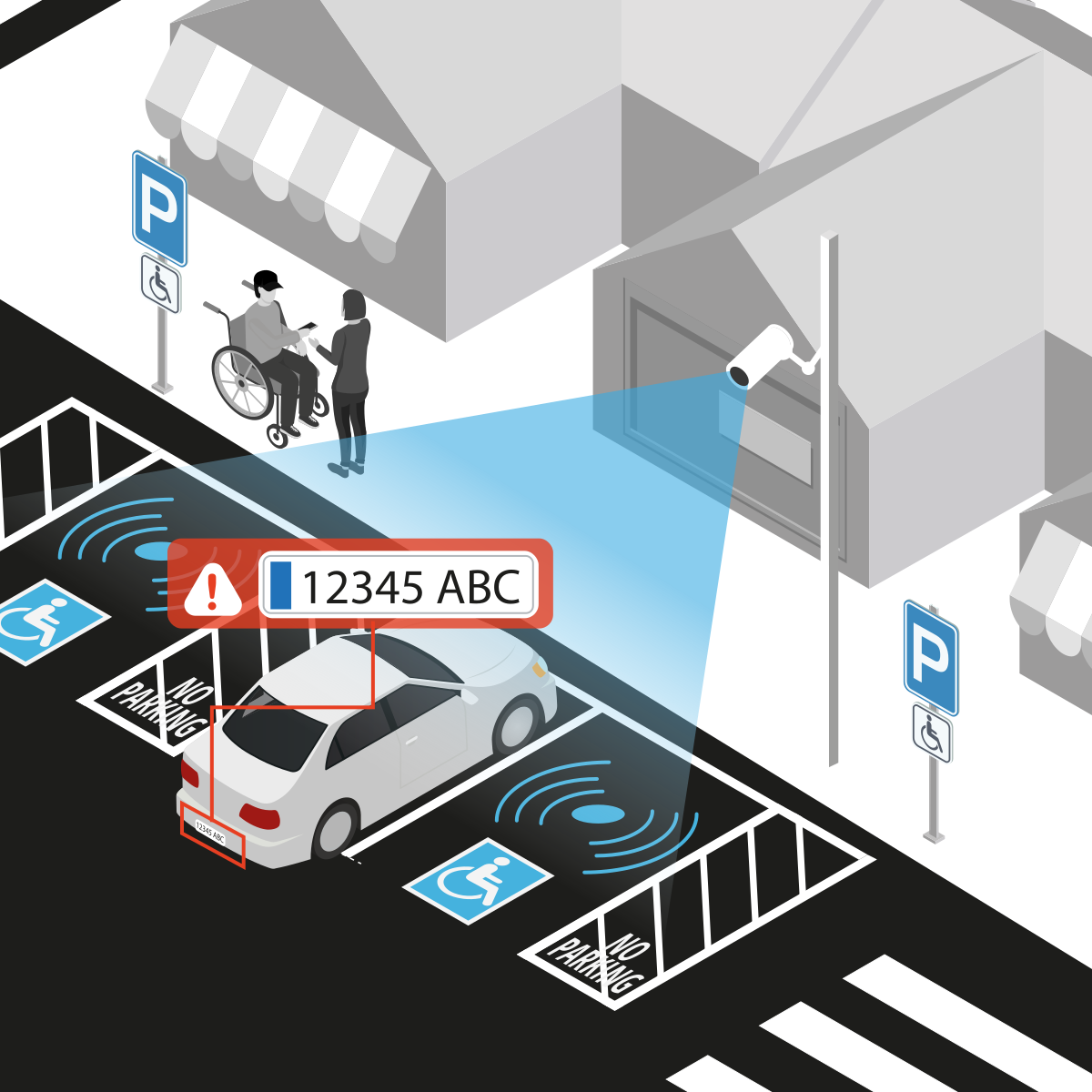
Fully automated LPR-based enforcement for accesible parking
Cameras automatically detect occupancy of accessible parking spaces and capture the vehicle’s license plate
The system validates in real time whether the license plate corresponds to an authorized vehicle
If a violation is detected, the system automatically generates the required evidence for enforcement
The process is carried out without manual intervention
Result: a fully automated model that ensures proper use of accessible parking spaces and maximizes enforcement efficiency

Automated accesible parking enforcement with real-time
IoT sensors or cameras detect occupancy of each accessible parking space
The user must have a valid permit and declare usage through the ParkTime app
The system cross-checks occupancy data with authorized vehicle databases and active permits or sessions
If the vehicle does not have a valid permit, has not declared usage, or does not meet the conditions, an automatic alert is generated
Enforcement officers receive notifications in real time and act only when necessary
Result: an efficient model that enables supervision based on real incidents and optimizes enforcement operations
Asisted enforcement of accesible parking via license plate or permit validation
The enforcement officer follows their regular route and scans the vehicle’s license plate using the ParkCtrl App
The system checks in real time whether there is available information on authorizations associated with that plate
When no authorized vehicle database exists, the officer can visually verify the disabled parking permit
In case of non-compliance, the system records the incident and provides the necessary information to issue a citation
Result: a flexible model that enables monitoring of accessible parking spaces without deploying infrastructure in the street, adapting to different authorization systems

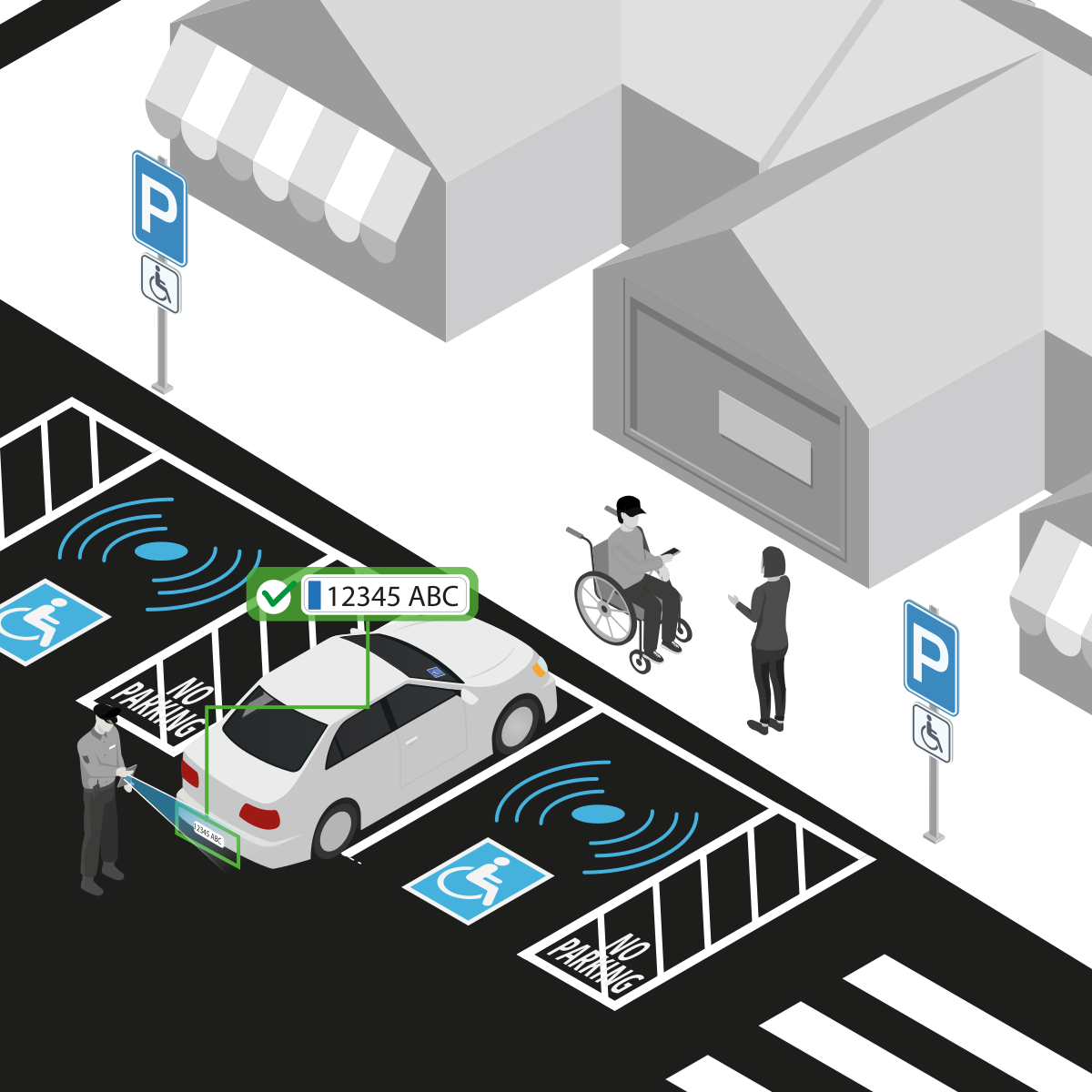
Automated enforcement with alerts
Watch the video to see how real-time alert-based enforcement works.

Explore the available technologies and configure your enforcement model
Technologies

Why choose Urbiotica for accessible parking enforcement?
Solution adaptable to different levels of automation
Evidence generation and legal reliability – Each incident is recorded with precise and verifiable information
Proven experience in high-demand operational environments – Over 16 years digitizing regulated parking in more than 50 countries
Single-space enforcement – Independent validation of each space for greater accuracy
Data to optimize management – Real-time information to improve regulation and planning

Projects that have trusted ParkCtrl

Installation of 1,060 U-Spot M2M sensors to exhaustively monitor reserved spots. This prevents unauthorized cars from parking there thanks to real-time alerts and improves the accessibility of holders of PRM cards.
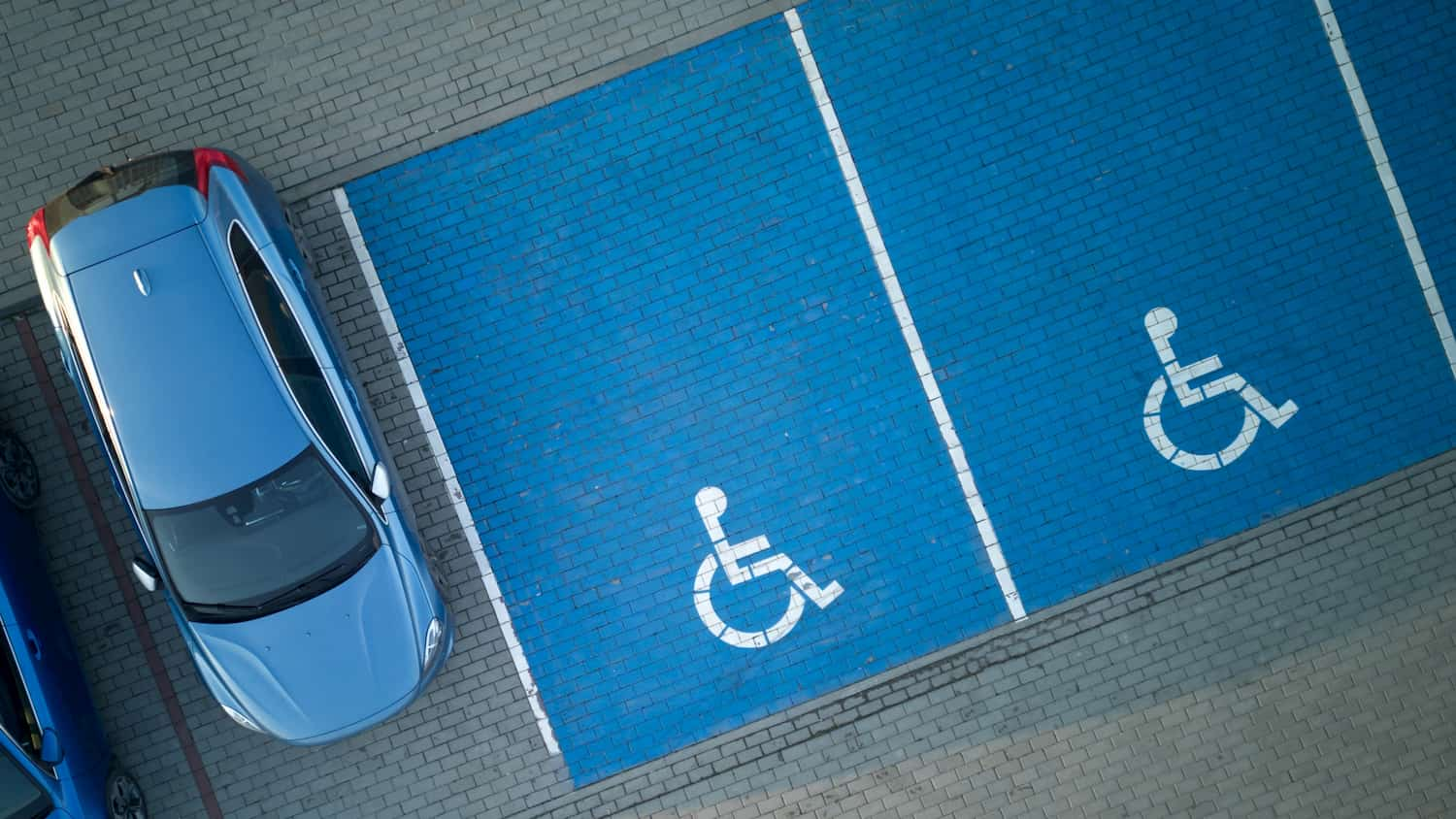
Digitalization of 353 accessible (PRM) parking spaces using IoT sensors to monitor real usage and publish open data. This improves supervision, enables the detection of misuse, and supports data-driven management to optimize urban planning and accessibility.

Frequently Asked Questions
Is it necessary to install sensors in every accessible parking space?
Not necessarily. In alert-based models, occupancy can be detected using IoT sensors installed in each space or camera-based solutions, depending on the characteristics of the environment.
In scenarios requiring higher automation, LPR-based camera systems can be deployed to automatically detect vehicles and validate authorization.
Additionally, assisted validation models allow enforcement officers to verify vehicles during regular patrols using a mobile app, without requiring sensors or cameras.
How is it validated whether a vehicle is authorized to use an accessible parking space?
Validation can be performed in different ways depending on the deployment model.
When an authorized vehicle database exists, the system can automatically validate the license plate.
In other cases, verification is carried out through digital permits or by visual inspection of the disabled parking permit by the enforcement officer, who can register the validation in the app.
The platform can integrate with municipal systems or existing databases, adapting to local regulations and operational models.
What happens if there is no database of authorized vehicles?
The solution can operate without a license plate database.
In these cases, enforcement is carried out through field verification by the officer, who visually checks the disabled parking permit and records the validation in the application.
This enables digital enforcement and full traceability of incidents even when authorization is not linked to the vehicle’s license plate.
How is the validity of enforcement ensured?
Each incident is recorded with precise and verifiable information, including occupancy data, vehicle authorization validation, and, when applicable, photographic evidence linked to the license plate.
The system maintains full traceability of detection, validation, and incident recording, ensuring consistency in enforcement procedures and providing documentation in case of appeals.
The generated data can be integrated with municipal systems to support enforcement workflows in line with local regulations.
Are enforcement officers required?
It depends on the level of automation selected.
In assisted validation models, officers perform checks during their regular patrols, either by scanning license plates or verifying permits.
In alert-based models, officers intervene only when the system detects a potential violation.
In fully automated LPR-based solutions, detection and evidence generation can be carried out without direct manual intervention.
The solution is flexible and adapts to each city’s organizational and regulatory model.