Intelligent management of loading and unloading zones in L'Hospitalet de Llobregat by means of artificial vision.
L'Hospitalet de Llobregat, one of the most densely populated municipalities in the Barcelona metropolitan area, was facing a common problem in urban logistics: the improper use of loading and unloading areas, which are essential to ensure efficient urban distribution of goods.
The lack of continuous control hindered the daily operations of delivery drivers and urban services, causing low turnover, undue parking and a negative impact on the overall mobility of the city.
The City needed to evolve towards a more efficient, proactive and more efficient, proactive and scalable control model, capable of covering thousands of meters of publiccapable of covering thousands of meters of public roads and generating reliable data for strategic decision making.
In addition, the challenge included moving towards automation of control, optimizingThe challenge also included moving towards automation of control, optimizing municipal resources and improving regulatory compliance without increasing operating costs.

Urbiotica implemented in L’Hospitalet de Llobregat one of the biggest deployments of loading and unloading management based on artificial vision in Spain, through the installation of more than 400 U-Spot Visio cameras cameras distributed throughout the city.
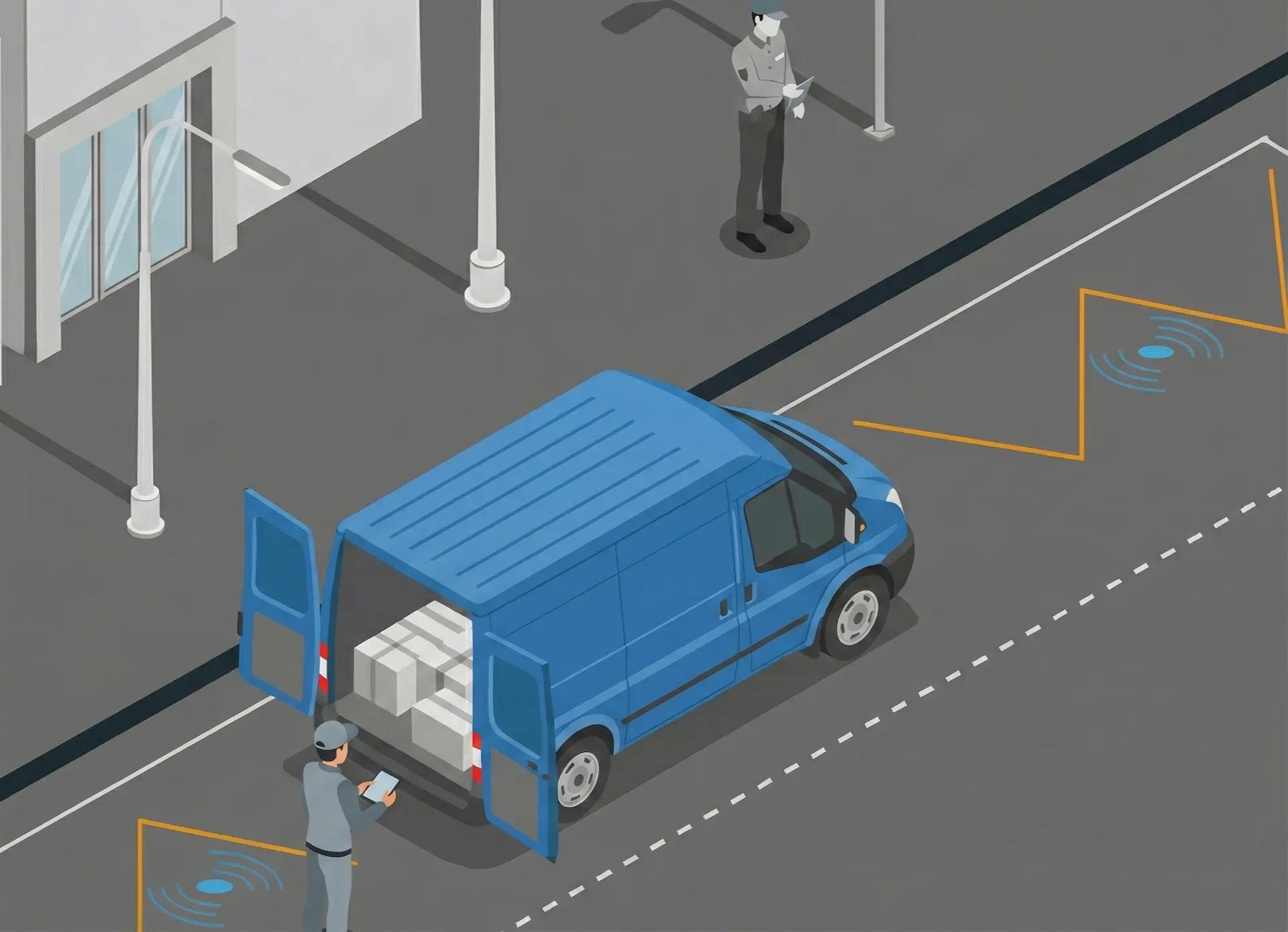
The solution allows real-time monitoring of parking space occupancy, detection of violations and analysis of usage patterns, providing the City Council with a complete and continuous view of the operation of loading and unloading zones.
Each camera is able to cover multiple places, detecting stay times, rotation and irregular behaviors with high accuracy. The information is centralized in Urbiotica’s management platform, from where historical data can be analyzed, areas can be compared and the impact of control campaigns can be evaluated.
The system is ready to integrate with ScancarScancar, allowing to evolve towards an automated control model in which the detection of an infraction generates an alert and triggers the capture of photographic evidence, closing the enforcement cycle in an efficient way.
- Continuous and real control of the loading and unloading zonesfrom a punctual surveillance to a permanent model.
- Significant reduction of violationsthrough automatic detection and enhanced compliance.
- Increased vehicle turnoverimproving the efficiency of urban distribution of goods.
- Data-driven managementwith objective indicators on occupancy, length of stay and usage patterns.
- Digitization of controlautomating the processes of detection, alert and evidence capture.
- Reduced urban congestionby reducing double lines, unnecessary maneuvers and traffic blockages.
- Scalable and flexible solutionadaptable to new areas and applicable to other uses such as PRM spaces, cabs or regulated parking.
- Improving urban sustainabilityreducing unnecessary trips and emissions associated with urban distribution.