The combination of dynamic signage and real-time data allows airportparking managers to know at all times how many spaces are occupied, as well as to detect usage patterns in each zone that help improve operations. Its ability to effortlessly coordinate parking access with reliable information and differentiate even between different profiles speeds up travel and reduces congestion.
The importance of efficient car park management parking at airports
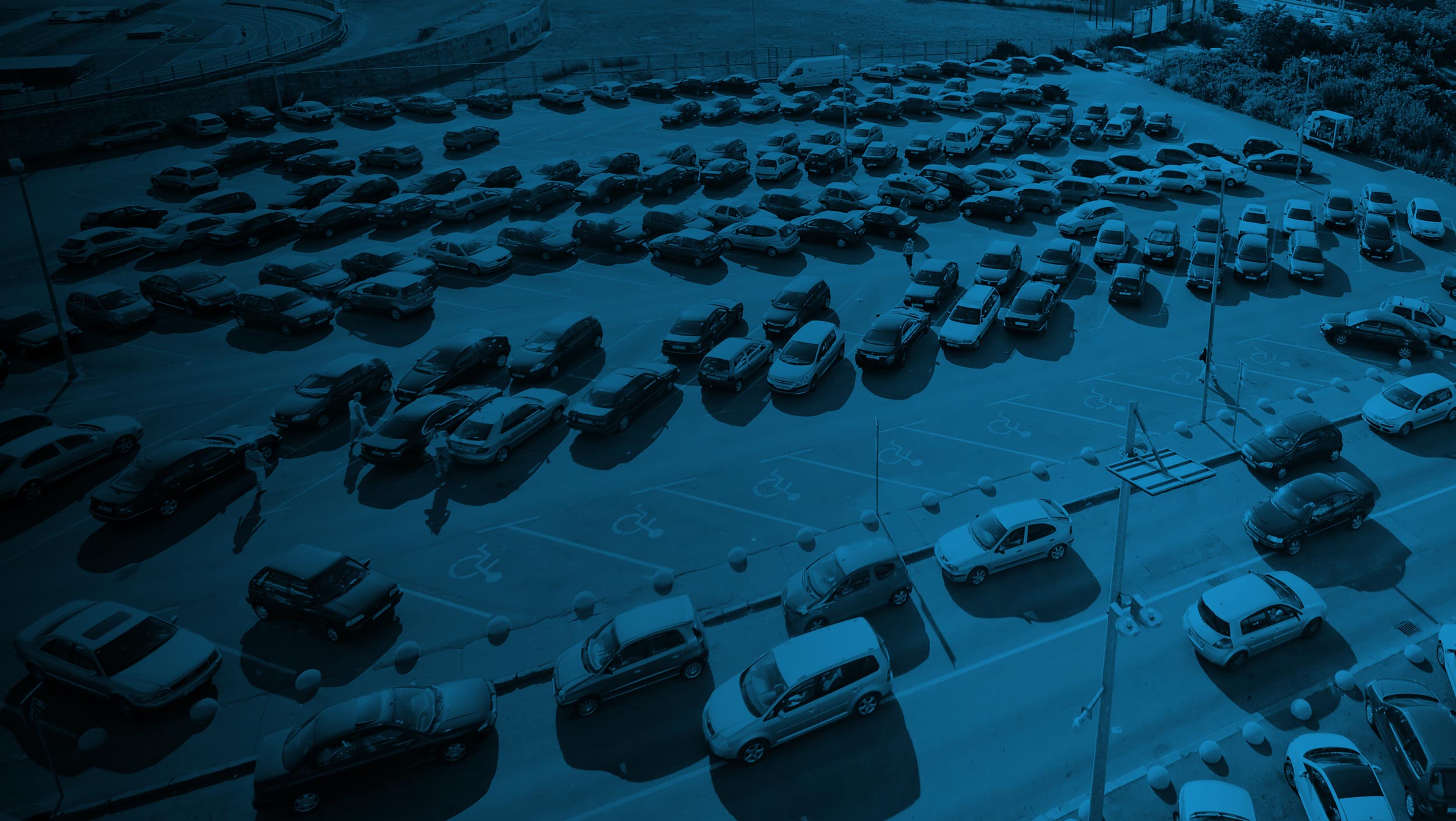
At airports, there is a constant flow of passengers and their families in their vehicles, cabs, public transport and logistics services, and there are times of the day when parking is most used, while at other times there is almost no one there. With traditional management systems, it is very difficult to predict how many spaces will be available and for how long: there are those who come only to drop off or pick up someone, and those who park for several days until they return from vacation.
Add to this the congestion at arrivals and departures due to not knowing where to go, and there is an extra degree of frustration and unease among travelers at the thought of having to rush to get to their flight. Vehicle rotation is important both for the user experience and for airport operations.
Smart Parking Guidance
Dynamic signaling: effective short- and long-term solution
In response to the complications that airports experience in their parking lots, dynamic signage has established itself as a short- and long-term solution. Variable signage panels (VMS) are located at strategic points from which it is easy to see the occupancy of each zone, preventing users from circulating unnecessarily throughout the site. The information they transmit is supported by the data received by the centralized management system from the installed sensors and machine vision cameras. If integrated, this information can also be reflected in mobile applications.
The combination of these devices and their immediate activity offers operational flexibility, being able to redirect traffic according to demand, closing sections temporarily if they are too full or are required for other uses, etc. Users find places more quickly, which avoids the dreaded traffic jams at entrances and exits. Visiting is more comfortable.
Real-time data for smart operational decisions
Real-time data helps airport managers to see what is happening in the parking facilities at any given moment and make decisions to improve the operation on an ongoing basis. Beyond parking space occupancy, i.e., knowing how many spaces are free or occupied, it is possible to analyze inbound and outbound flows to see how many vehicles are arriving and departing.
By analyzing historical data with Big Data tools, it is easier for authorities to discover occupancy patterns according to day, time and time of year to anticipate demand.
Strategies to improve airport accessibility
1. Guided routes to free places
By combining occupancy data with dynamic signage, drivers can be guided to areas with free spaces and reduce the likelihood of driving through congested areas that waste their time. For example, panels at parking lot entrances display the number of spaces available on each level and sector, and are updated as vehicles occupy the spaces.
2. Access management by priority
Because intelligent solutions can distinguish between different users, it is possible to reserve spaces for short-term parkers, those with early flights or connections, and those who need to leave the vehicle for several days. At the same time, spaces can be differentiated for workers, people with reduced mobility, electric vehicles, and so on. Each user is directed to the spaces that suit his or her needs.
3. Clear information for the user
To enhance the user experience, the system is designed to be intuitive and easy to understand for all types of users, including first-time airport visitors. Variable signage panels make it possible to quickly identify availability and how to get to each area, mitigating confusion and stress. By providing clear and accessible information, passengers can enjoy airport services for longer.
Additional benefits of combining dynamic signaling with real-time data
Less environmental pollution
Less time spent driving around looking for a free parking space translates into less fuel consumed and less polluting emissions. Intelligent systems are a useful measure to support environmental policies and more responsible transportation.
Profitability of the service
By improving vehicle rotation, better use can be made of allocated resources and available spaces, preventing some of them from remaining empty due to lack of knowledge of where they are located. It improves parking operations and increases the airport’s profitability.
3. Improved safety
With less congestion, the risk of accidents inside the airport parking lot is reduced . Users have no need to rush, they arrive at their gate calmly. A more controlled flow of vehicles also facilitates emergency response.