Pay-by-plate enforcement solutions for regulated parking
Ensure payment compliance through automatic license plate validation.


Monitor payment compliance by linking each parking session to the vehicle through license plate identification and validation, with different automation levels depending on operational needs.
The solution allows operators to choose between assisted digital validation by enforcement officers using license plate scanning during inspections, or fully automated enforcement using LPR-enabled cameras, adapting to the requirements of each project.
-
No need for sensors in every parking space
-
Fast deployment without civil works
-
Digitize and optimize enforcement operations through license plate validation
-
Reduce fraud and overstays
-
Improve inspection efficiency with assisted validation workflows
-
Integrate with existing ticketing systems
-
Enable fully automated enforcement using LPR cameras
-
Quick deployment without roadside infrastructure installation
How does pay-by-plate parking work?

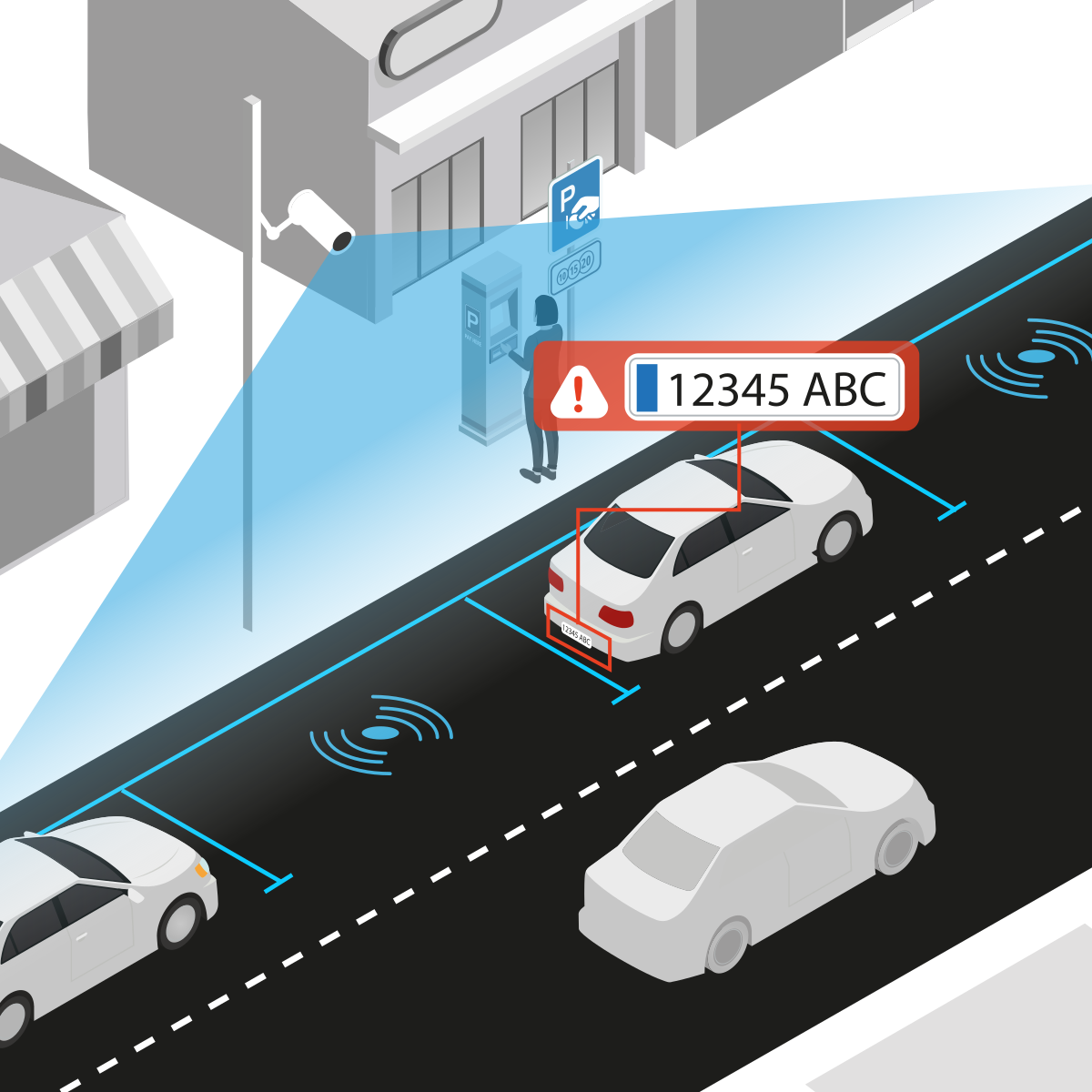
Fully automated pay-by-plate enforcement with LPR cameras
Cameras automatically identify the vehicle’s license plate and register its presence and parking duration, either in individual spaces or through access control points (entry and exit)
The system validates payment status in real time
If a violation is detected, the required evidence is automatically generated
The process can run without manual intervention and supports automated enforcement workflows
Result: full automation of violation detection and evidence generation.
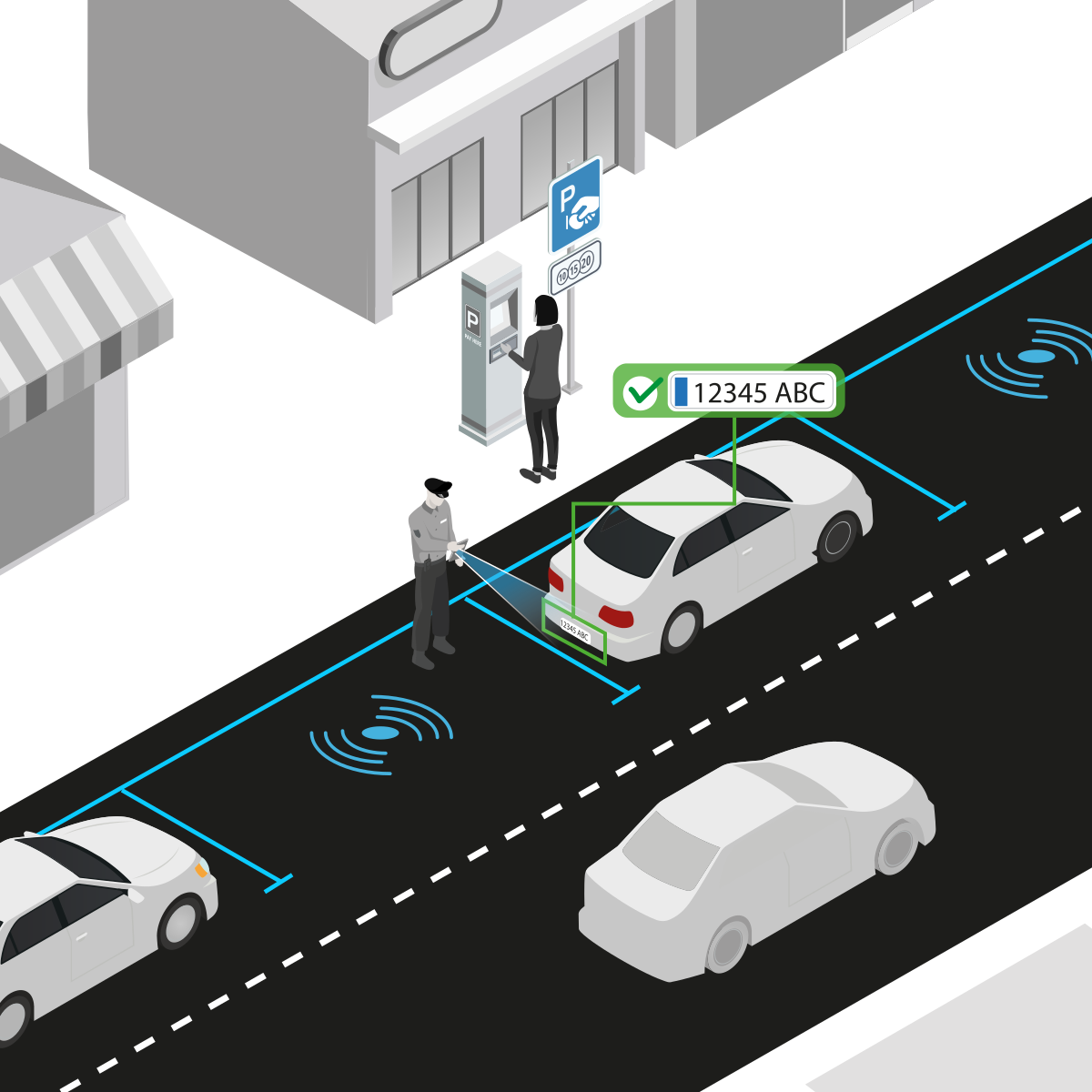
Pay-by-plate enforcement through assisted digital validation
Payment data from parking meters or mobile apps is integrated into Urbiotica’s smart parking platform
Enforcement officers follow their regular inspection routes and scan vehicle license plates using the ParkCtrl App
The system automatically matches the plate number with payment information
Within seconds, the officer can verify whether there is a valid ticket or if parking time has expired
Result: a fast and fully digital workflow that validates compliance without requiring roadside infrastructure.

Discover available technologies and configure your pay-by-plate enforcement solution.
Technology

Why choose Urbiotica for pay-by-plate parking enforcement?
Flexible and scalable model. Start with assisted validation and evolve toward full automation.
Integration with existing systems. The solution connects to existing ticketing systems through APIs.
Proven smart parking expertise. More than 16 years of experience and deployments in over 50 countries.
Traceability and reliable evidence. Every validation is recorded, ensuring consistency in enforcement workflows.
Data to improve parking management. Consolidated information to analyze usage patterns and optimize parking policies.



FAQs
Is it necessary to install sensors or cameras?
Not necessarily.
In the assisted digital validation model, enforcement is carried out by officers scanning vehicle license plates during inspections, without requiring sensors in every space or roadside cameras.
If a fully automated model is preferred, LPR cameras can be added to automatically identify vehicles and generate evidence.
This flexibility allows operators to deploy the solution progressively according to the desired automation level.
Can it integrate with any ticketing system?
Yes.
The solution integrates with existing payment systems regardless of the parking meter or mobile payment provider.
The platform uses APIs and open standards to ensure fast and secure integration without replacing existing infrastructure.
It is a scalable and flexible model designed to evolve alongside the parking regulation system.
Can the solution evolve toward a fully automated camera-based model?
Yes.
The system allows operators to start with assisted digital validation, where enforcement officers verify compliance by scanning license plates during inspection routes.
If required, LPR cameras can later be added to automate violation detection and evidence generation. This reduces manual intervention and, in deployments where regulations allow it, enables automated enforcement workflows.
This approach makes it possible to progressively evolve from a lightweight operational model to higher levels of automation without changing the enforcement logic or ticketing system integration.
How does the solution work in access-controlled environments?
The solution can also operate in access-controlled environments using LPR cameras to identify vehicles.
The system records the vehicle’s license plate upon entry and generates a first evidence record with the associated image. At exit, the system identifies the plate again and records departure time, generating a second evidence record.
Using this information, the platform automatically calculates parking duration and validates payment status. If no valid ticket exists after the allowed period, the system automatically generates a violation report including the vehicle plate number and entry/exit evidence.
This model enables fully automated enforcement with complete process traceability and no manual intervention.
Can violations be processed automatically?
Yes.
When an irregularity is detected — such as the absence of a valid ticket or an overstay — the system records all required information to process the corresponding violation according to applicable regulations.
The platform provides verifiable data such as the vehicle plate number, payment status at the time of inspection, and validation records generated by the enforcement officer.
In more advanced LPR-based models, the system can also generate photographic evidence and automate violation detection and registration.
Is it compatible with pay-by-space parking models?
No.
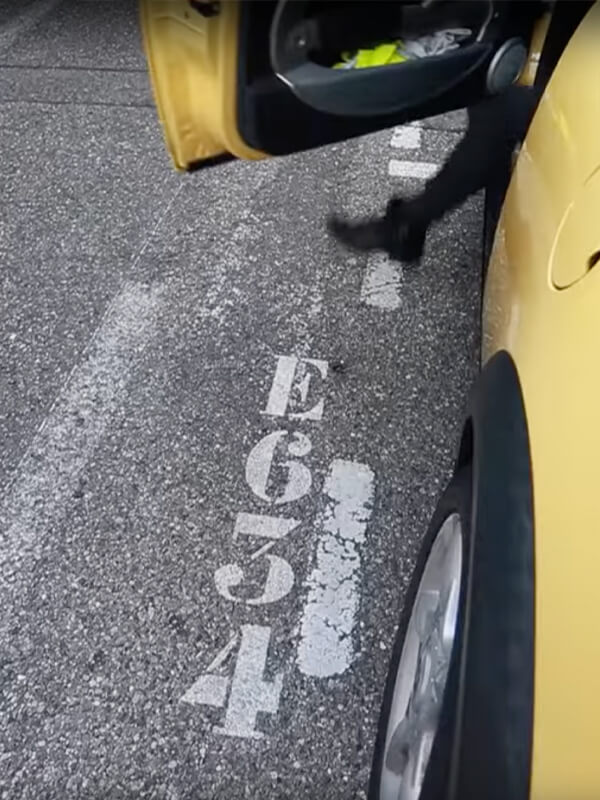
In pay-by-plate models, the ticket is linked to the vehicle, while in pay-by-space models the payment is linked to a specific parking space.
Both approaches follow different operational logics depending on the parking regulation model implemented.
Pay-by-plate enables vehicle-based validation, while pay-by-space allows compliance to be validated directly on each occupied space.
The choice between both models depends on the existing ticketing infrastructure and the parking management strategy implemented in each city.